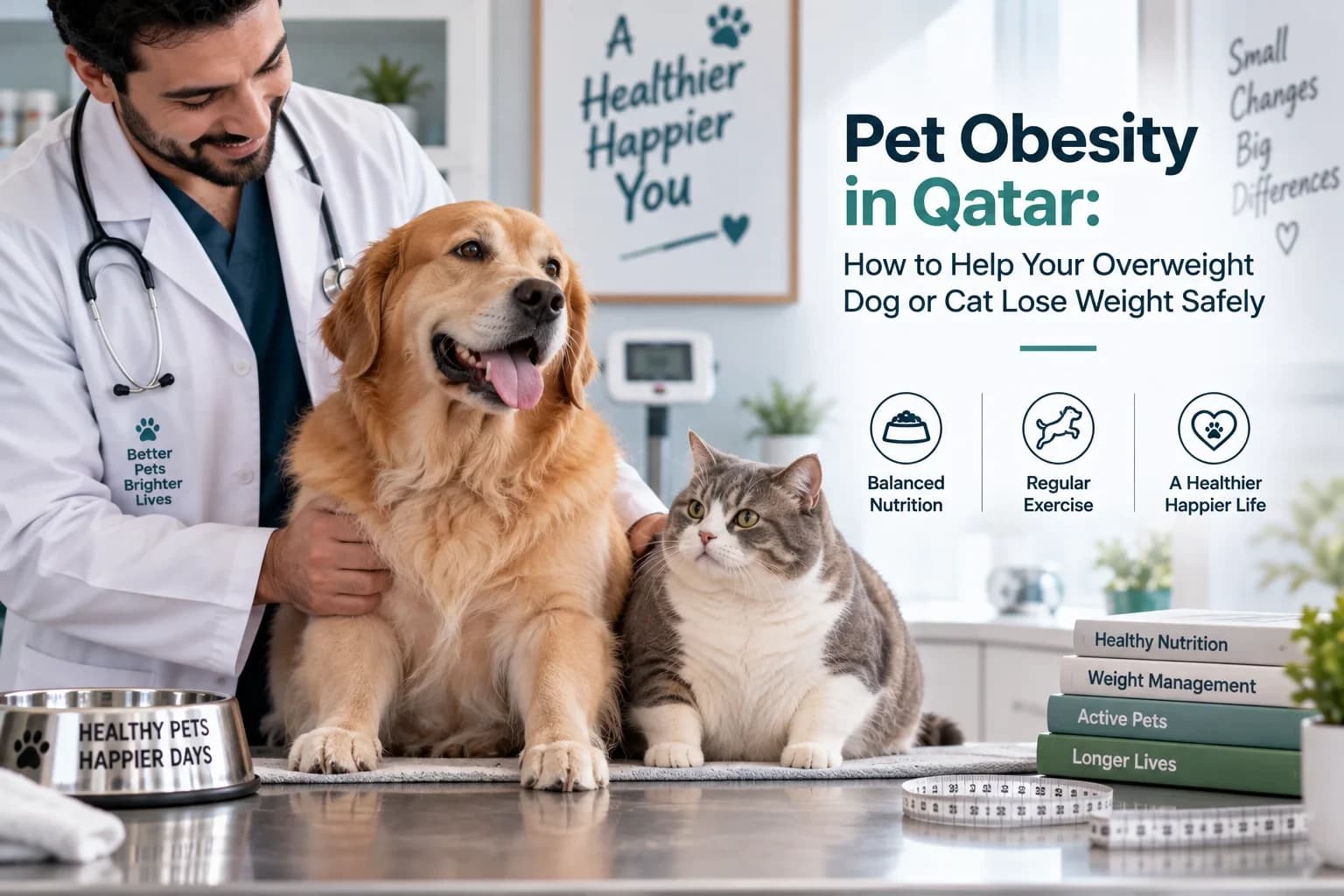
Pet obesity Qatar is an increasingly important health concern because extra body fat can affect mobility, energy, and overall wellbeing in both dogs and cats. In Qatar, hot weather can also make outdoor activity more challenging for some pets, particularly during the hottest parts of the year. However, weight loss should never mean simply cutting food dramatically. A safe plan combines a veterinary assessment, appropriate calorie control, suitable nutrition, activity, and regular monitoring. If you have an overweight dog Doha or a cat that has gradually gained weight, the first step is to determine whether your pet is genuinely overweight and what their healthy target should be.
Medical review notice: This article should be reviewed and approved by a licensed veterinarian before publication as medically reviewed content.
How to Tell If Your Dog or Cat Is Overweight
Body weight alone does not always tell you whether a pet is carrying too much fat. Veterinarians commonly use a Body Condition Score (BCS), which evaluates body shape and the amount of fat covering the ribs and other areas. On the commonly used 9-point scale, an ideal dog generally falls around 4–5, while an ideal cat is around 5. Signs of excess weight can include ribs that are difficult to feel, reduced waist definition, a rounded abdomen, and lower willingness to exercise. A veterinary examination is particularly useful because breed, age, muscle mass, and health conditions can all affect how a pet should look at a healthy weight.
What Is the Ideal Dog Weight for Your Pet?
There is no single number that represents an ideal dog weight for every dog. A healthy target depends on breed, size, age, sex, neuter status, body composition, and individual condition. This is why a veterinarian should determine an appropriate target rather than relying only on a breed-average weight found online. The same principle applies to cats. Your veterinarian can combine current body weight with BCS and other clinical information to estimate an appropriate target. Once an ideal target is established, calorie requirements can be calculated and then adjusted according to how your pet responds. This makes weight management more individualized than simply following the feeding recommendation printed on a food package.
Why Pet Obesity Can Affect Your Dog or Cat’s Health
Excess body fat is more than a cosmetic issue. Obesity can increase the risk of several health problems and can make movement more difficult. In cats, excess weight is associated with conditions including diabetes, osteoarthritis, and other chronic health concerns. In dogs, carrying excess weight can place additional stress on joints and affect mobility and activity. Obesity may also create a cycle in which reduced activity contributes to further weight gain. The good news is that weight management can be part of a broader preventive healthcare plan. The goal is not simply to make a pet look slimmer, but to support healthy body condition, mobility, nutrition, and quality of life over the long term.
How to Create a Safe Cat Weight Loss Plan
A cat weight loss plan should be created carefully because cats should not be subjected to sudden or severe food restriction. A veterinarian can first review the cat’s current diet, treats, feeding habits, activity, medical history, and body condition. The daily calorie target can then be established and monitored over time. Veterinary weight-management diets may be useful because they can provide controlled calories while maintaining appropriate nutrient levels. Treats also need to be included in the daily calorie budget rather than added on top of meals. Regular weigh-ins help determine whether the plan is working and whether adjustments are necessary. Gradual progress is important because rapid feline weight loss can increase the risk of serious complications.
How Much Weight Should a Cat Lose Each Week?
For cats, VCA notes that a commonly targeted rate is around 1–2% of initial body weight per week, with a slower rate potentially appropriate for severely obese cats. The exact target should be determined by the veterinary team rather than treated as a universal rule.
Safe Weight Loss Tips for an Overweight Dog in Doha
An overweight dog Doha owners are trying to help should lose weight through controlled nutrition and an appropriate activity routine rather than crash dieting. Start by measuring food accurately and recording meals, treats, snacks, and table food. Portion-controlled feeding can make calorie intake easier to manage than leaving food available continuously. Exercise should be appropriate for the dog’s age, fitness, joints, and medical condition. In Qatar’s hot climate, owners may need to schedule walks and outdoor activity during cooler periods and use indoor enrichment when outdoor exercise is unsuitable. A veterinarian can also determine whether an underlying medical issue or medication may be contributing to weight gain.
What Should a Pet Weight Loss Diet Include?
A successful diet is not simply the smallest possible amount of food. When calories are restricted, the diet still needs to provide the nutrients required to maintain health and lean tissue. Veterinary weight-management diets may be formulated with appropriate calorie density and nutrient concentrations for controlled weight reduction. Protein, fiber, moisture, and fat levels can vary depending on the animal and the selected diet. Owners should also consider treats because they contribute calories to the daily total. AAHA recommends creating a specific feeding plan that covers the diet, amount, feeding frequency, treats, and other calorie sources. Measuring portions accurately is therefore an important part of a successful weight management routine.
How Exercise Helps Dogs and Cats Lose Weight
Nutrition is usually the foundation of a weight-management plan, but appropriate activity can support the process. For dogs, controlled walks, play, and other activities can increase energy expenditure when they are physically suitable. Cats may benefit from interactive play, food-dispensing toys, environmental enrichment, and activities that encourage movement. Exercise should be increased gradually, especially when a pet has been inactive or has joint problems. In Qatar, temperature is another practical consideration. Outdoor activity may need to be moved to cooler parts of the day, while indoor enrichment can provide an alternative during extreme heat. Your veterinarian can help decide what level of activity is appropriate for your pet’s age and health.
When to Book a Pet Diet Consultation Qatar
A pet diet consultation Qatar can be useful when you are unsure whether your pet is overweight, when weight continues to increase despite controlled portions, or when previous attempts at weight loss have not worked. Veterinary assessment is especially important if your pet has another medical condition, takes medication, has reduced mobility, or suddenly gains weight. A professional plan can include a body condition assessment, diet history, calorie calculation, target weight, feeding instructions, activity recommendations, and follow-up measurements. Elite Clinic states that its medical services include comprehensive health assessments and personalized nutrition guidance for pets, making veterinary consultation a practical starting point for owners who need an individualized weight-management plan.
Help Your Pet Reach a Healthier Weight With Elite Clinic
If you are concerned about your dog or cat’s weight, avoid making drastic food changes without professional guidance. Elite Clinic provides veterinary care for dogs and cats in Qatar, including medical services and personalized nutrition guidance. A veterinary assessment can help determine whether your pet is overweight, establish a realistic target, and create a plan that can be monitored safely. The clinic is located on Al Rayyan Al Shafi St in Al Rayyan and provides contact support for pet owners.
Frequently Asked Questions About Pet Weight Loss
How do I know if my dog is overweight?
Look for difficulty feeling the ribs, reduced waist definition, a rounded abdomen, or reduced stamina. A veterinarian should confirm your dog’s Body Condition Score and determine whether weight loss is actually needed.
How can I help my cat lose weight safely?
Avoid sudden food restriction. A veterinarian should calculate an appropriate calorie target, select a suitable diet, account for treats, and monitor your cat’s progress regularly.
What is a healthy weight for a dog?
There is no universal ideal weight for all dogs. The appropriate target depends on breed, size, age, body composition, and individual health. A veterinarian can establish an appropriate target using body weight and Body Condition Score.
Can treats make my pet gain weight?
Yes. Treats, snacks, table food, and food used with medication all contribute calories. They should be included when calculating your pet’s total daily intake rather than treated as calorie-free extras.