
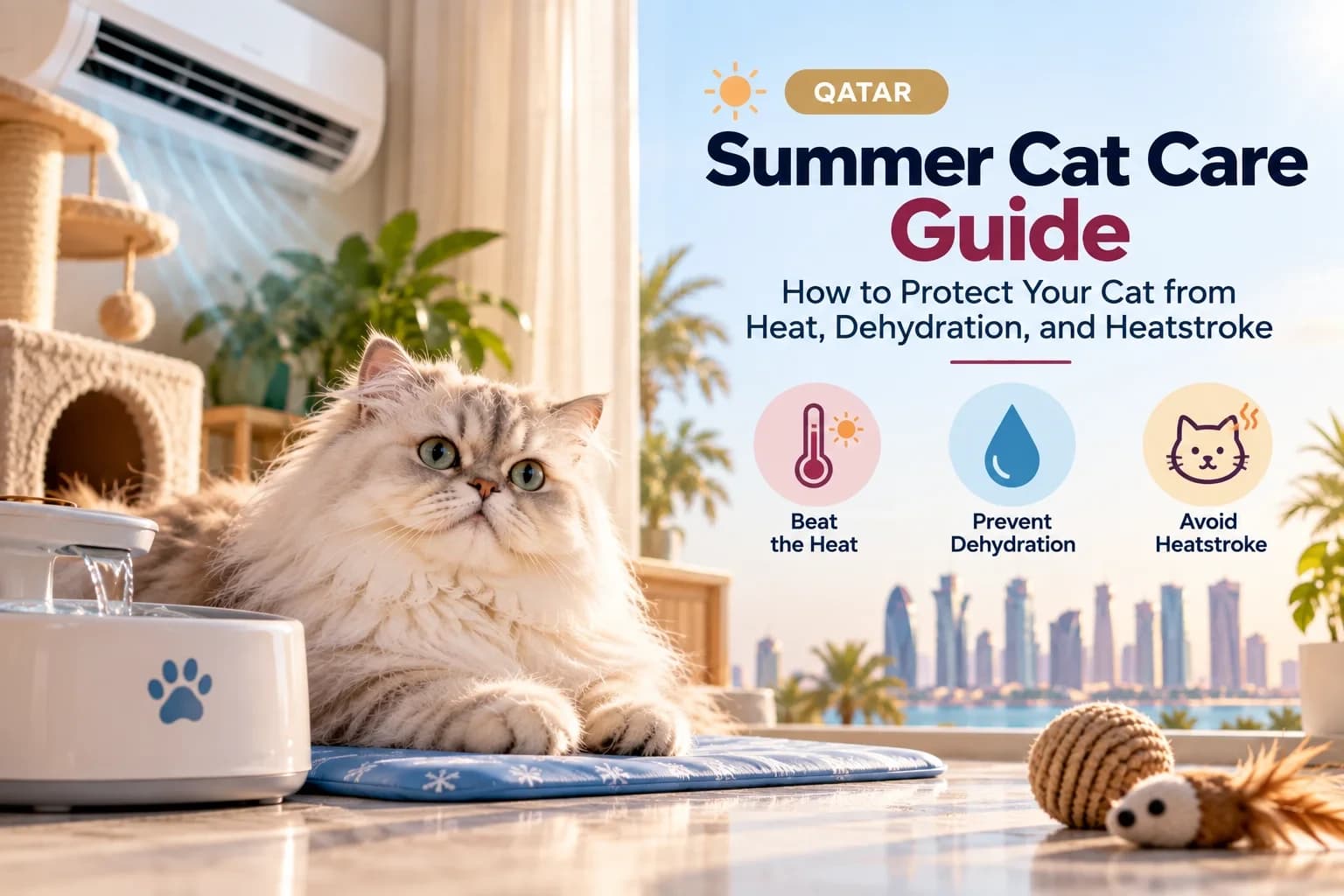
Qatar's summer is one of the most challenging seasons for pets, especially cats. With extremely high temperatures and humidity levels, cats become more vulnerable to heat stress, dehydration, and heatstroke—serious conditions that can quickly become life-threatening if left untreated. Although cats are generally more tolerant of heat than some other animals, they cannot regulate their body temperature as efficiently as humans.
Whether your cat lives exclusively indoors or spends short periods outside, understanding proper summer care is essential in Qatar's hot climate. In this guide, you'll learn how to protect your cat during the summer months, recognize the warning signs of heatstroke, prevent dehydration, and keep your feline companion safe, healthy, and comfortable throughout the season.
Why Is Qatar's Summer Dangerous for Cats?
Summer temperatures in Qatar often exceed 45°C (113°F), accompanied by high humidity. These conditions accelerate fluid loss and make it much harder for cats to cool themselves naturally.
Some cats are at greater risk than others, including:
Kittens
Senior cats
Overweight cats
Long-haired breeds
Cats with heart or respiratory diseases
Flat-faced breeds such as Persian and Exotic Shorthair cats
Even indoor cats can experience heat stress if air conditioning fails or the home is poorly ventilated.
Signs of Dehydration in Cats
Dehydration is one of the most common summer health problems in cats. It may occur because they are not drinking enough water or are losing fluids due to excessive heat.
Common signs include:
Low energy and lethargy
Dry or sticky gums
Loss of appetite
Sunken eyes
Excessive panting
Reduced skin elasticity
Decreased urination
The earlier dehydration is recognized, the easier and more successful treatment is likely to be.
How to Encourage Your Cat to Drink More Water
Many cats naturally drink less water than they actually need. Fortunately, there are several simple ways to increase their daily water intake.
Place Multiple Water Bowls
Keep fresh water bowls in different areas of your home so your cat always has easy access.
Use a Cat Water Fountain
Many cats prefer running water over still water, making pet fountains an excellent option.
Refresh Water Frequently
Replace the water several times throughout the day to keep it cool, clean, and appealing.
Feed Wet Food
Wet food contains a high percentage of moisture and naturally contributes to your cat's daily hydration.
Signs of Heatstroke in Cats
Heatstroke is a veterinary emergency that requires immediate medical attention.
Watch for symptoms such as:
Heavy or persistent panting
Elevated body temperature
Severe weakness or inability to stand
Rapid heartbeat
Vomiting or diarrhea
Bright red gums
Confusion or disorientation
Collapse or seizures in advanced cases
If your cat develops any of these signs, seek emergency veterinary care immediately.
First Aid for Heatstroke
Before arriving at your veterinarian, you can help your cat by taking the following steps:
Move your cat into a cool, air-conditioned area.
Gently cool the body using towels dampened with cool (not ice-cold) water.
Use a fan to improve air circulation.
Offer fresh water only if your cat is conscious and able to drink voluntarily.
Never force water into your cat's mouth.
Transport your cat to the nearest veterinary clinic immediately.
Avoid using ice water, as rapid cooling may constrict blood vessels and slow the body's natural cooling process.
Creating the Ideal Indoor Environment During Summer
Indoor cats also require protection from extreme heat.
To keep your home comfortable:
Keep air conditioning or fans running during hot weather.
Provide shaded, cool resting areas.
Move cat beds away from sunny windows.
Use curtains or blinds to reduce direct sunlight.
Brush your cat regularly to remove excess loose fur.
Ensure good airflow throughout the home.
Should You Shave Your Cat During Summer?
Many owners believe shaving helps cats stay cooler, but this is usually a misconception.
A cat's coat actually acts as insulation, helping protect against both heat and direct sunlight.
Instead of shaving, it's better to:
Brush your cat regularly.
Remove loose and matted fur.
Trim excessively long coats only when necessary and preferably by a professional groomer.
Avoid full-body shaving unless specifically recommended by your veterinarian.
Summer Cat Care in Qatar
Because of Qatar's unique climate, cats require additional care throughout the hottest months of the year. Summer cat care should focus on prevention rather than treatment.
If you own a cat in Qatar:
Keep your cat indoors during the hottest hours of the day.
Ensure fresh, cool drinking water is always available.
Monitor changes in appetite, energy levels, or behavior.
Contact your veterinarian if any unusual symptoms develop.
Maintain a healthy body weight to reduce the risk of heat stress.
Provide cool, comfortable resting areas inside your home.
These simple daily habits can greatly reduce the risk of dehydration, heat exhaustion, and heatstroke.
Proper Nutrition During Summer
Nutrition plays an important role in maintaining your cat's health during hot weather.
Recommended practices include:
Feeding smaller meals more frequently.
Including wet food as part of the daily diet.
Keeping food properly refrigerated.
Discarding food left out for extended periods.
Avoiding spoiled food or food exposed to excessive heat.
If your cat experiences poor appetite or dehydration, your veterinarian may recommend nutritional supplements or supportive care.
Should Cats Go Outside During Summer?
Indoor cats should remain inside whenever possible during the summer.
If your cat spends time outdoors:
Allow outdoor activity only early in the morning or after sunset.
Avoid hot pavement and surfaces that can burn paw pads.
Ensure shaded resting areas are always available.
Check your cat carefully after returning indoors for signs of heat stress.
When Should You Visit a Veterinarian?
Don't wait for symptoms to become severe.
Seek veterinary care immediately if your cat experiences:
Persistent panting
Refusal to drink water
Loss of appetite lasting more than 24 hours
Vomiting or diarrhea
Extreme lethargy
Elevated body temperature
Difficulty walking
Collapse or seizures
Early veterinary intervention significantly improves recovery and reduces the risk of serious complications.
How Can I Tell If My Cat Has Heatstroke?
Common signs of heatstroke include:
Excessive panting
Weakness or extreme lethargy
High body temperature
Bright red gums
Vomiting or diarrhea
Difficulty walking
Collapse or unconsciousness in severe cases
If your cat develops these symptoms, treat the situation as a medical emergency and visit your veterinarian immediately.
in the end Summer in Qatar requires extra attention to your cat's health and wellbeing. High temperatures and humidity can quickly lead to dehydration, heat stress, and potentially fatal heatstroke if proper precautions are not taken.
Providing constant access to fresh water, maintaining a cool indoor environment, offering appropriate nutrition, and monitoring your cat for early warning signs are simple yet highly effective ways to protect your pet throughout the hottest months of the year.
If you notice any symptoms of overheating or dehydration, seek veterinary care without delay. Prompt treatment is the best way to protect your cat's health and ensure they enjoy a safe and comfortable summer.
Frequently Asked Questions (FAQ)
Can cats tolerate Qatar's summer heat?
Cats can tolerate moderate temperatures, but Qatar's extreme summer heat and humidity significantly increase the risk of dehydration, heat stress, and heatstroke. They should always have access to cool indoor spaces and fresh drinking water.
How much water should a cat drink during summer?
There is no fixed amount, but clean, fresh water should always be available. Cats eating dry food generally require more water than those eating wet food.
Is wet food better during summer?
Yes. Wet food contains significantly more moisture than dry food and helps improve hydration, especially during hot weather.
Can I leave my cat in the car for a few minutes?
No. Never leave a cat inside a parked vehicle, even briefly. Temperatures inside cars rise rapidly and can cause fatal heatstroke within minutes.
Does shaving a cat help keep it cool?
Not necessarily. A cat's coat provides natural insulation against both heat and sunlight. Regular brushing is usually more beneficial than shaving unless recommended by a veterinarian.
Can cats go outdoors during summer?
Yes, but only during the cooler parts of the day, such as early morning or after sunset. Outdoor activity should be avoided during midday when temperatures are at their highest.