
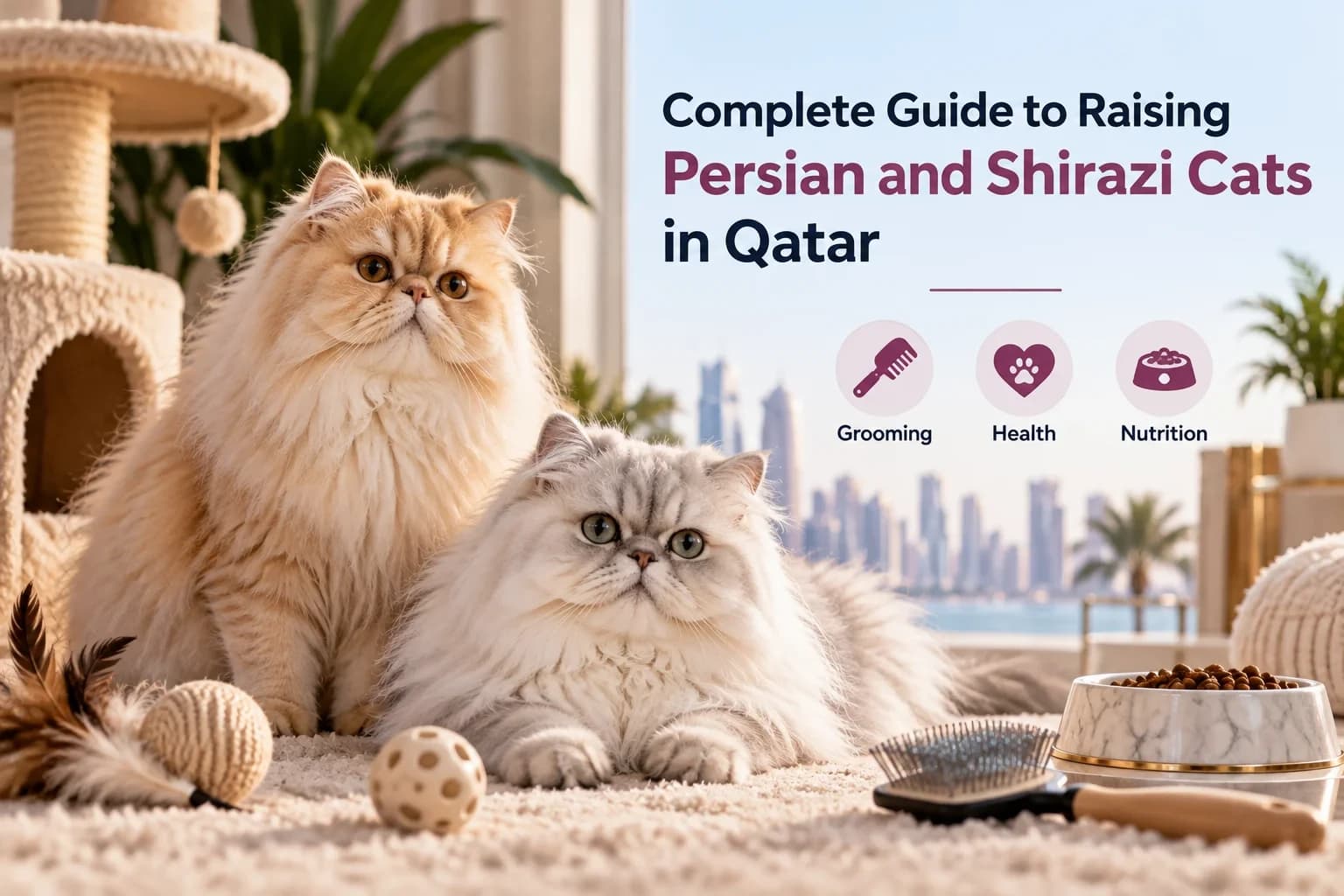
Persian and Shirazi cats are among the most popular cat breeds in Qatar, thanks to their elegant appearance, long and silky coats, and calm, affectionate personalities. Their gentle temperament makes them an ideal choice for families and pet lovers. However, owning a Persian or Shirazi cat involves much more than providing food and shelter. These beautiful cats require daily grooming, balanced nutrition, routine veterinary care, and continuous attention to their overall health, especially in Qatar's hot climate.
This breed is particularly sensitive to heat and has unique care requirements for its eyes, skin, coat, and respiratory system. Understanding these needs is essential for keeping your cat healthy and ensuring a long, comfortable life. In this comprehensive guide, you'll learn everything you need to know about raising Persian and Shirazi cats in Qatar, from grooming and nutrition to preventive healthcare and heat protection.
Why Do Persian and Shirazi Cats Need Special Care?
Persian and Shirazi cats differ from many other breeds because of their distinctive physical characteristics, including flat faces, short noses, and long, thick coats. While these features contribute to their unique beauty, they also make them more prone to certain health issues such as breathing difficulties, excessive tear production, tangled fur, and skin infections.
Additionally, Qatar's high temperatures and humidity increase the risk of heat stress, making it essential to provide an indoor, climate-controlled environment. Daily care and regular health monitoring help these cats stay active, comfortable, and healthy.
Daily Coat Care for Persian and Shirazi Cats
A Persian cat's luxurious long coat is one of its most recognizable features, but it requires consistent maintenance to prevent matting and dirt buildup.
Daily grooming should include:
Brushing the coat at least once a day with a brush designed for long-haired cats.
Removing tangles before they become painful mats.
Eliminating loose hair to reduce shedding around the home.
Checking the skin regularly for parasites or signs of irritation.
Cleaning sensitive areas such as beneath the tail and between the toes.
Bathing your cat every four to six weeks with a cat-safe shampoo is also recommended. After bathing, always dry the coat thoroughly to prevent bacterial or fungal skin infections.
Eye and Ear Care
Persian cats often experience excessive tear production due to their flat facial structure. If left untreated, tear stains can discolor the fur and increase the risk of eye infections.
Proper eye care includes:
Cleaning the eyes daily using sterile gauze or a soft cotton pad.
Gently removing tear discharge without applying pressure.
Visiting a veterinarian if you notice yellow or green discharge, swelling, or redness.
The ears should also be checked regularly for wax buildup, inflammation, or parasites and cleaned using veterinarian-approved ear-cleaning products.
Proper Nutrition for Persian and Shirazi Cats
Nutrition plays a major role in maintaining your Persian cat's overall health, immune system, skin, and beautiful coat.
A balanced diet should contain:
High-quality protein for muscle development.
Healthy fats rich in Omega-3 and Omega-6 fatty acids.
Essential vitamins and minerals.
Dietary fiber to reduce hairball formation.
Adequate water to support kidney and urinary tract health.
Specialized Persian cat food is highly recommended because it is formulated to support digestive health, skin condition, and coat quality.
Avoid feeding your cat foods that can be toxic, including:
Chocolate
Onions
Garlic
Grapes
Raisins
Cooked bones
Fatty or heavily seasoned human foods
The Importance of Hydration in Qatar's Climate
Because Qatar experiences high temperatures for much of the year, Persian cats need plenty of fresh water to avoid dehydration.
To encourage water intake:
Place clean water bowls in multiple locations around the home.
Replace the water every day.
Consider using a cat water fountain if your pet prefers running water.
Offer wet food alongside dry food to increase moisture intake.
Proper hydration helps reduce the risk of kidney disease and urinary tract problems.
Respiratory Health Care
Due to their short noses, Persian cats may experience breathing difficulties, especially during hot or humid weather.
To protect their respiratory health:
Keep your home cool with air conditioning.
Avoid exposing your cat to direct sunlight.
Ensure good indoor ventilation.
Watch for signs such as excessive panting, difficulty breathing, or loud snoring.
If breathing problems become persistent, seek veterinary care immediately.
Maintaining a Healthy Weight
Shirazi cats are generally less active than many other breeds, making them more susceptible to obesity, which can contribute to joint problems, diabetes, and heart disease.
To maintain a healthy weight:
Measure food portions carefully.
Divide meals into two or three servings per day.
Encourage 20–30 minutes of daily play.
Provide interactive toys and climbing trees.
Monitor your cat's weight regularly.
Dental and Oral Care
Dental disease is common in Persian cats and can lead to pain, bad breath, and difficulty eating.
To maintain good oral health:
Brush your cat's teeth using cat-safe toothpaste.
Offer dental treats or specially formulated dental diets.
Schedule routine dental examinations with your veterinarian.
Treat gum disease and damaged teeth promptly.
Routine Veterinary Care
Regular veterinary visits help detect health problems before they become serious.
Routine healthcare should include:
Core vaccinations and annual boosters.
Parasite prevention and deworming.
Regular eye, ear, skin, and dental examinations.
Weight monitoring.
Blood tests and health screenings when recommended.
Keeping an updated medical record ensures your cat receives appropriate preventive care throughout its life.
Protecting Persian Cats from Qatar's Summer Heat
Summer in Qatar can be especially challenging for long-haired cats.
To protect your Persian cat from heat stress:
Keep your cat indoors during the hottest part of the day.
Use air conditioning or fans.
Provide fresh, cool drinking water at all times.
Use cooling mats or cool resting surfaces.
Avoid vigorous exercise during hot weather.
Watch for signs of heat exhaustion such as excessive panting, lethargy, or loss of appetite.
Creating the Perfect Indoor Environment
Persian cats thrive in a peaceful, safe, and comfortable indoor environment.
To create an ideal home:
Provide a comfortable sleeping area.
Place the litter box in a quiet, clean location.
Clean food and water bowls daily.
Offer interactive toys and enrichment activities.
Provide elevated resting places and climbing furniture.
Minimize stress and loud noises inside the home.
Spending quality time playing and bonding with your cat also supports its emotional well-being.
Signs That Your Cat Needs Veterinary Care
Seek immediate veterinary attention if your cat experiences:
Loss of appetite for more than 24 hours.
Difficulty breathing.
Persistent vomiting or diarrhea.
Significant weight loss.
Extreme lethargy.
Unusual eye or nasal discharge.
Excessive hair loss.
Sudden behavioral changes.
Difficulty urinating or defecating.
Early diagnosis significantly improves treatment success and long-term health.
Persian Cats – Raising Shirazi Cats
Raising Persian and Shirazi cats requires daily commitment to grooming, proper nutrition, preventive healthcare, and providing a safe indoor environment. Although they require more attention than many other cat breeds, they reward their owners with affectionate personalities, intelligence, and loyal companionship.
In Qatar, it is especially important to provide a cool indoor environment, ensure proper hydration, and protect these cats from extreme heat throughout the year.
in the end Persian and Shirazi cats are among the world's most elegant and beloved companion animals, but they require specialized care to maintain their health and stunning appearance. Daily grooming, balanced nutrition, regular eye and dental care, and routine veterinary checkups all contribute to a long, healthy life.
Living in Qatar also means taking extra precautions against high temperatures by providing a cool indoor environment, fresh drinking water, and protection from heat stress. By following these care guidelines, owners can ensure their Persian or Shirazi cats remain healthy, happy, and active for many years.
Frequently Asked Questions (FAQ)
1. What is the difference between Persian cats and Shirazi cats?
There is actually no difference. "Shirazi cat" is simply the common name used in many Arabic-speaking countries for the Persian cat breed. Both names refer to the same breed, known for its flat face, luxurious long coat, and gentle personality.
2. Are Persian cats suitable for Qatar's climate?
Yes. Persian cats can live comfortably in Qatar if they are kept indoors in an air-conditioned environment. Because they are sensitive to heat, owners should always provide fresh water and avoid prolonged exposure to direct sunlight.
3. How often should I brush my Persian cat?
Persian and Shirazi cats should be brushed every day to prevent tangles and mats, reduce shedding, and maintain healthy skin and a beautiful coat.
4. What is the best diet for Persian and Shirazi cats?
A healthy diet should include high-quality protein, Omega-3 and Omega-6 fatty acids, essential vitamins, minerals, dietary fiber, and plenty of fresh water. Foods specifically formulated for Persian cats are highly recommended.
5. Do Persian cats need regular baths?
Yes. Persian cats should generally be bathed every four to six weeks using a shampoo designed specifically for cats. Their coat should always be dried completely afterward to prevent skin infections and matting.