
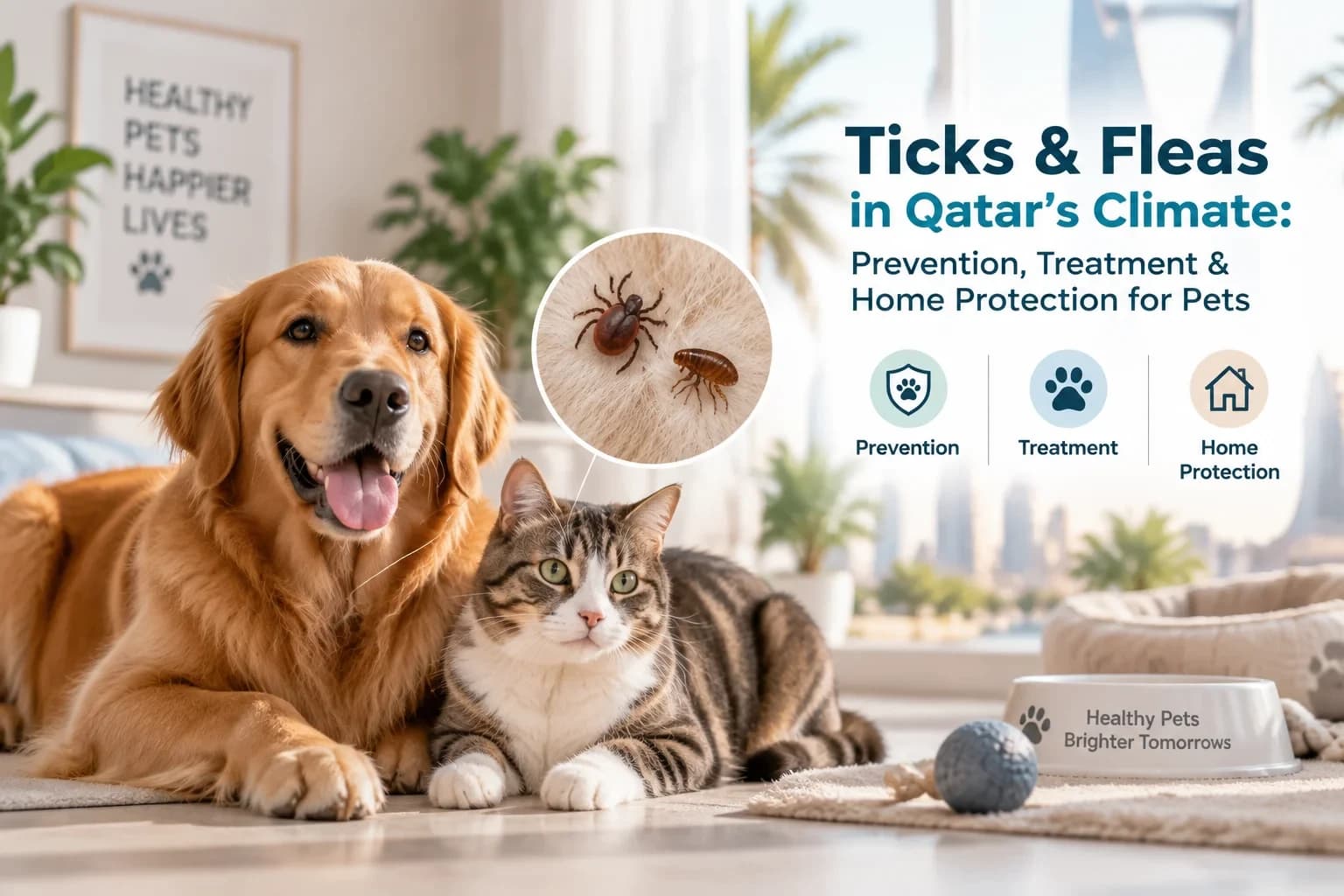
Ticks and fleas are among the most common external parasites affecting dogs and cats, and they can become a serious concern for pet owners in Qatar due to the country’s warm climate. These parasites do not only cause itching and discomfort but may also lead to skin problems, infections, and the transmission of certain diseases if left untreated.
Understanding how to identify, prevent, and manage these parasites helps protect your pet’s health and improves their overall quality of life. Regular veterinary check-ups, preventive treatments, and proper home care are essential parts of controlling ticks and fleas throughout the year.
At Elite Pet Veterinary Clinic, pets receive professional medical care, preventive parasite programs, and veterinary guidance to keep dogs and cats healthy in Qatar’s environment.
Medical disclaimer: This article has been reviewed by Dr. Ronaldo, Veterinarian at Elite Pet Veterinary Clinic, to ensure the accuracy of the veterinary information provided. However, every pet is different, and diagnosis and treatment decisions should always be based on a professional veterinary examination.
Understanding ticks and fleas Qatar: Why Pets Are at Risk
Ticks and fleas Qatar problems are common because these parasites can survive and reproduce in warm environments. Fleas are small insects that feed on animal blood and can quickly multiply, while ticks are external parasites that attach to the skin of pets and remain there while feeding.
Dogs and cats may pick up fleas or ticks during outdoor activities, contact with other animals, or exposure to contaminated environments. Even indoor pets can become infected because parasites or flea eggs can enter homes through clothing, shoes, or other animals.
Common risks include:
Contact with infected pets.
Outdoor areas with grass or soil.
Poor parasite prevention routines.
Warm conditions that support parasite development.
Early detection and regular prevention are important because treating a large infestation is usually more difficult than preventing the problem from the beginning.
Why Qatar’s Climate Increases Flea and Tick Problems
Qatar’s hot climate creates conditions that can support the activity and reproduction of many pet parasites. While fleas and ticks may be more noticeable during certain seasons, pets can be affected throughout the year if preventive care is not maintained.
How heat and humidity affect flea life cycles
Fleas can complete different stages of their life cycle, including eggs and larvae, in the surrounding environment. This means that removing adult fleas from your pet alone may not completely solve the problem.
A successful approach usually requires:
Treating the affected pet.
Cleaning areas where pets sleep and rest.
Following a veterinarian-approved prevention schedule.
Monitoring pets regularly for signs of parasites.
Because Qatar’s environment allows parasite exposure throughout the year, prevention is often more effective than waiting until an infestation appears.
Signs Your Pet Has Fleas or Ticks
Recognizing early signs of parasites helps prevent discomfort and reduces the chance of complications. Some pets may show obvious symptoms, while others may have a mild infestation that is difficult to notice.
Common signs include:
Frequent scratching, licking, or biting of the skin.
Redness or irritation.
Hair loss in affected areas.
Small black flea dirt on the skin or bedding.
Visible ticks attached to the pet’s body.
Restlessness or changes in behavior.
Common symptoms in dogs
Dogs with flea problems may scratch around the neck, back, tail area, and legs. Some dogs can develop allergic reactions to flea bites, causing intense itching and skin inflammation.
Ticks may attach around areas such as:
Ears.
Neck.
Between toes.
Around the face.
Regularly checking your dog after outdoor activities can help detect parasites before they become a bigger issue.
Signs of flea and tick problems in cats
Cats are often excellent at hiding discomfort, so owners may not notice parasite problems immediately. Signs of infestation may include excessive grooming, skin irritation, or small wounds caused by scratching.
Cat owners should check areas where parasites commonly hide, especially around:
The ears.
Neck area.
Base of the tail.
Under the legs.
Best flea treatment Qatar: Effective Options for Dogs and Cats
Choosing the best flea treatment Qatar depends on the pet’s age, health condition, lifestyle, and the severity of the infestation. Veterinary guidance is important because not all parasite products are suitable for every animal.
Treatment options may include:
Spot-on topical treatments.
Oral flea medications.
Flea collars.
Veterinary sprays or environmental treatments.
A veterinarian can recommend the safest option and create a prevention plan suitable for your pet.
Veterinary flea medications
Professional flea treatments are designed to target parasites effectively while considering your pet’s safety. Using random products or incorrect doses may cause problems, especially in cats, which can be sensitive to some ingredients.
Never use dog flea products on cats unless specifically approved by a veterinarian, as some ingredients can be dangerous for cats.
Flea treatment dogs Doha: What Pet Owners Should Know
Finding reliable flea treatment dogs Doha options is important because dogs can quickly develop discomfort when exposed to fleas. Treatment should focus not only on removing existing fleas but also preventing future infestations.
A complete flea control plan may include:
Regular preventive medication.
Veterinary examinations.
Washing pet bedding.
Cleaning carpets and furniture.
Treating other pets in the household if needed.
Stopping treatment too early can allow flea populations to return because eggs and larvae may remain in the environment.
Tick prevention cats Qatar: Keeping Cats Safe
Tick prevention cats Qatar is especially important for outdoor cats or pets that live in homes with other animals. Although cats may groom themselves frequently, grooming does not always remove attached ticks.
Helpful prevention steps include:
Using veterinarian-approved tick prevention products.
Checking your cat’s skin regularly.
Keeping living areas clean.
Scheduling routine veterinary visits.
If you find a tick attached to your cat, avoid unsafe removal methods and ask your veterinarian for proper guidance.
How to Protect Your Home from Flea Infestation
A flea infestation home problem can continue even after treating your pet because flea eggs and larvae may exist in carpets, bedding, and furniture.
Cleaning steps to remove fleas from your home
Effective home protection includes:
Washing pet blankets and bedding regularly.
Vacuuming floors, carpets, and furniture.
Cleaning areas where pets spend most of their time.
Following professional recommendations for environmental treatments.
Preventing reinfestation
To reduce the chance of fleas returning:
Maintain regular parasite prevention.
Check new pets before introducing them to your home.
Keep outdoor areas clean.
Continue monitoring your pet after treatment.
Pet parasites Gulf: Why Regular Veterinary Prevention Matters
Pet parasites Gulf concerns are not limited to fleas and ticks only. Different parasites can affect pets depending on their environment, lifestyle, and exposure risks.
Regular veterinary care helps identify parasite problems early and provides preventive solutions. Elite Pet Veterinary Clinic offers preventive healthcare programs, medical services, and parasite control support as part of comprehensive pet care in Qatar.
Routine veterinary visits also allow professionals to evaluate your pet’s overall health and recommend suitable protection based on their individual needs.
Protect Your Pet with Expert Veterinary Care in Qatar
Protecting your dog or cat from ticks and fleas requires more than treating visible symptoms. A professional veterinary plan can help prevent recurring problems, protect your home, and maintain your pet’s comfort.
At Elite Pet Veterinary Clinic, pet owners in Qatar can access veterinary services, preventive care plans, grooming support, and medical guidance from an experienced team.
Book a veterinary consultation today to choose the right parasite prevention and treatment approach for your pet.
Frequently Asked Questions About Ticks and Fleas in Qatar
How do I know if my dog has fleas?
Common signs include excessive scratching, skin irritation, hair loss, and visible flea dirt on the skin or bedding. A veterinarian can confirm the infestation and recommend suitable treatment.
What is the best flea treatment Qatar for cats?
The best flea treatment Qatar option depends on your cat’s age, health, and condition. Veterinary-approved products are recommended because some treatments can be unsafe for cats.
Can fleas live inside my home?
Yes, fleas can survive in carpets, bedding, and furniture. Treating both the pet and the environment is important during a flea infestation home situation.
How often should I use flea prevention for my pet?
The schedule depends on the product used and your veterinarian’s recommendation. Many preventive treatments require regular application to maintain protection.
Are ticks dangerous for dogs and cats?
Ticks can cause irritation and may transmit certain diseases. Regular checking and preventive treatment help reduce the risk of tick-related problems.