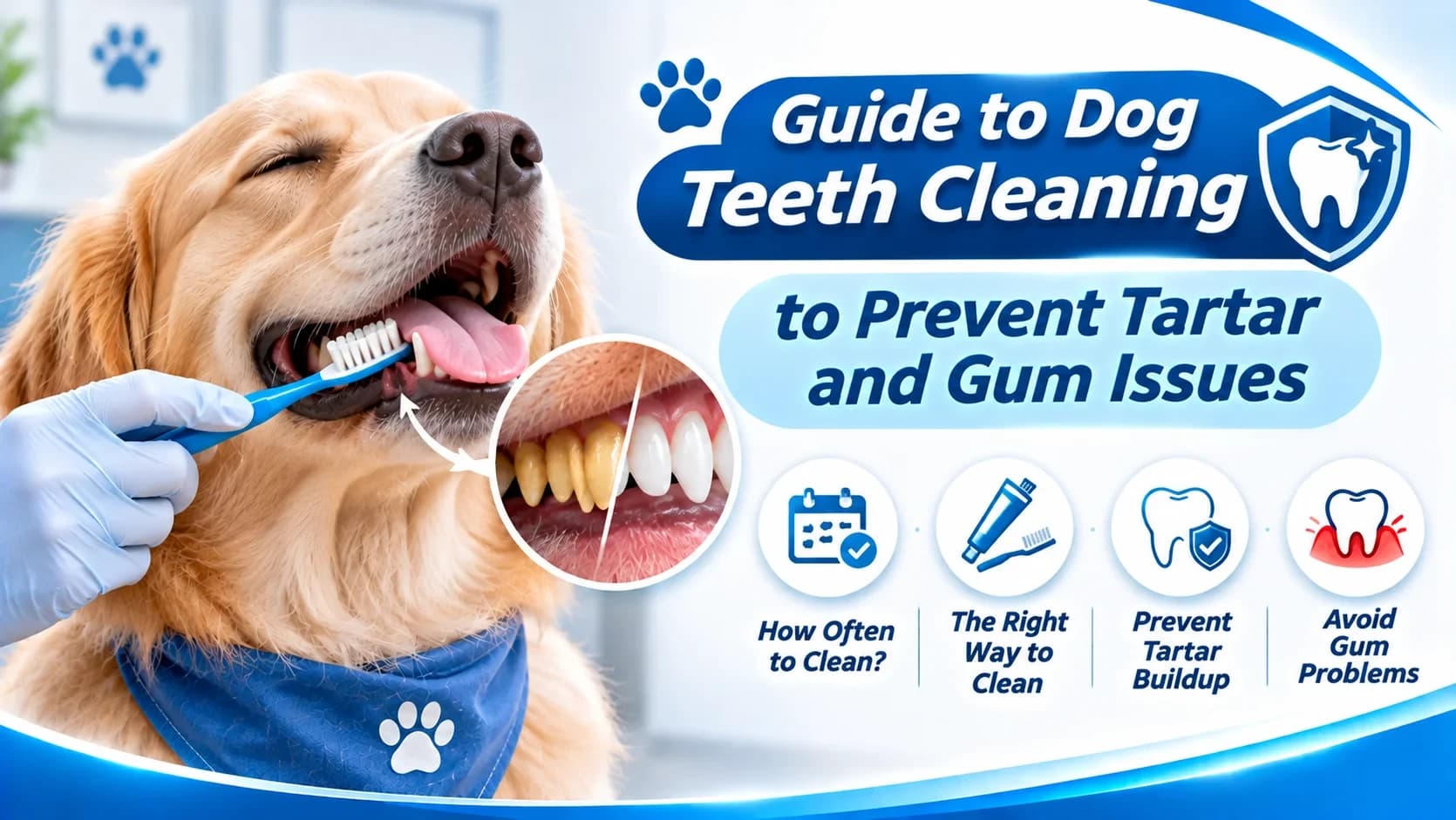
Keeping your dog's teeth clean may seem like a simple part of pet care, but it plays an important role in maintaining their health and comfort. The buildup of bacteria and food debris on the teeth leads to plaque formation, which can gradually harden into tartar and increase the risk of gingivitis and periodontal disease.
The best way to care for your dog's teeth is to brush them regularly using a toothbrush and toothpaste specifically designed for pets, alongside veterinary checkups to detect deposits and problems that may not be visible to the naked eye. In this guide, you will learn how to clean your dog's teeth at home, which tools to use, the signs that require a veterinary visit, and how to prevent oral and gum problems.
Why Do Dogs Need Regular Teeth Cleaning?
Dental problems usually begin with plaque buildup, a sticky layer of bacteria that forms on the surface of the teeth and along the gumline. If it is not removed regularly, it reacts with minerals in saliva and hardens into tartar, which sticks to the teeth and becomes difficult to remove with a regular toothbrush.
As these deposits continue to accumulate, gum inflammation may develop and progress into periodontal disease, which affects the tissues and bones supporting the teeth. This can eventually cause teeth to become loose or fall out.
The problem is not limited to appearance or bad breath. Dental disease can cause pain that affects chewing and eating. You can learn more about dental diseases in cats and dogs through our specialized guide, which explains warning signs, prevention methods, and professional veterinary cleaning.
How to Clean Your Dog's Teeth at Home: A Step-by-Step Guide
Regular home brushing helps remove plaque before it hardens into tartar. For the best results, use the right tools and gradually introduce your dog to the process without forcing them.
1. Choose a Dog Toothbrush and Toothpaste
Before you begin, prepare the following tools:
A soft-bristled toothbrush designed for dogs and suitable for their mouth size.
Toothpaste specifically formulated for dogs and other pets.
Small treats to reward your dog after brushing sessions.
A clean piece of gauze that can initially be used to introduce your dog to having their teeth touched.
Avoid using human toothpaste on dogs. It is designed for people who spit out the toothpaste after brushing, whereas dogs may swallow it. Some human toothpaste products also contain xylitol, a sweetener that is highly toxic to dogs, or other ingredients that may cause health problems if swallowed. Always use toothpaste specifically formulated for dogs.
2. Gradually Get Your Dog Used to Teeth Cleaning
Do not start by putting a toothbrush directly into your dog's mouth, especially if they are not used to having their teeth touched. Begin by gently touching the muzzle and lips, then lift the lip for a few seconds to help your dog become comfortable with seeing their teeth.
You can initially use a clean piece of gauze to introduce your dog to having their teeth touched and help them accept oral care. Gauze may help remove some plaque, but it is not an equivalent substitute for a toothbrush, which is better suited to cleaning tooth surfaces and areas near the gumline.
Then gradually introduce the toothbrush, offering a treat after each successful attempt. If your dog shows significant fear, pain, or attempts to bite, do not force them to continue.
3. Brush the Teeth Using Gentle Movements
Apply an appropriate amount of dog-specific toothpaste to the toothbrush. Then gently lift your dog's lip and begin brushing the outer surfaces of the teeth using soft circular motions, focusing on the areas near the gumline, as these are particularly prone to plaque buildup.
Pay attention to the molars and canines. Avoid applying excessive pressure to the gums or forcing your dog's mouth open. You can divide brushing into short sessions if your dog does not initially tolerate having all their teeth cleaned at once.
4. Maintain a Regular Brushing Routine
Daily brushing is the most effective way to reduce plaque buildup, although brushing several times a week is still better than not brushing at all. However, home brushing cannot guarantee complete prevention of tartar formation and does not replace regular veterinary dental checkups.
What Are the Signs of Tartar Buildup and Gum Disease in Dogs?
Oral problems may develop gradually without the owner noticing them at first. Therefore, it is important to monitor the appearance of your dog's teeth and gums and pay attention to behavioral changes.
Some of the most common warning signs include:
Persistent bad breath in dogs.
Yellow or brown deposits on the teeth.
Red, swollen, or bleeding gums.
Increased drooling.
Chewing on one side of the mouth.
Dropping food while eating.
Reluctance to eat or chew.
Loose or missing teeth.
These signs do not necessarily indicate one specific condition, as they may be associated with different oral diseases or other health problems. Therefore, your dog should be examined by a veterinarian if any of these symptoms appear, especially if accompanied by noticeable pain, facial swelling, or difficulty eating.
Do Dental Cleaning Needs Differ from One Dog to Another?
Yes. Dental care needs vary depending on a dog's age, breed, tooth alignment, and overall health.
Small-breed dogs may be more prone to plaque buildup and periodontal problems because their teeth are often crowded within the jaw. Some brachycephalic breeds may also experience dental crowding or misalignment, making regular cleaning and monitoring particularly important.
For puppies, it is best to gradually introduce them to having their mouths handled and their teeth cleaned. During the transition from baby teeth to permanent teeth, they may experience some discomfort. Therefore, you should not force a puppy to have their teeth brushed if they are experiencing pain during this stage.
Older dogs may require closer dental monitoring because dental problems can accumulate over time. The veterinarian will determine the appropriate examination schedule based on each dog's condition.
When Does Your Dog Need Professional Tartar Removal by a Veterinarian?
Once plaque hardens into tartar, a toothbrush or toothpaste can no longer remove it. In this case, your dog needs professional dental cleaning by a veterinarian using specialized instruments to remove deposits above and below the gumline.
How Is Professional Veterinary Dental Cleaning Performed?
The procedure begins with an assessment of the mouth and teeth. Comprehensive dental cleaning is usually performed under general anesthesia, allowing the veterinarian to examine all the teeth and safely clean the areas below the gumline.
The procedure may include:
Examining the teeth and gums and assessing the degree of inflammation.
Taking dental X-rays when necessary to detect hidden problems.
Removing plaque and tartar from above and below the gumline.
Polishing the teeth after removing the deposits.
Evaluating damaged teeth and determining whether treatment or extraction is necessary.
Before anesthesia, the veterinarian assesses the dog's overall health and may request blood tests or additional examinations depending on the dog's age and medical history. During the procedure, vital signs such as heart rate, breathing rate, oxygen levels, blood pressure, and body temperature are monitored by the veterinary team.
Cleaning without anesthesia is not recommended as an equivalent alternative because it does not allow the veterinarian to fully examine and clean areas below the gumline, where problems may exist that cannot be detected through a superficial examination.
Tips for Maintaining Your Dog's Dental Health and Preventing Tartar
In addition to brushing, several other practices can help support your dog's oral health:
Choose dental care products approved by the Veterinary Oral Health Council (VOHC), and make sure they are suitable for your dog's size and age.
Consult your veterinarian about foods and treats specifically designed for dental care.
Avoid extremely hard bones and toys that may cause tooth fractures.
Examine your dog's mouth regularly to notice changes in tooth color or gum appearance.
Include dental examinations in routine veterinary visits, with follow-up frequency determined according to your dog's age, breed, health condition, and history of oral disease.
Remember that dental care products and treats are supportive measures, not substitutes for brushing or professional cleaning when needed.
Maintain Your Dog's Dental Health with Specialized Veterinary Care
Preventing gum disease and tartar buildup starts with regular home care, but it also requires veterinary monitoring to detect problems that may not be visible to the naked eye.
If you notice deposits on your dog's teeth, persistent bad breath, or changes in eating habits, do not delay a veterinary examination. Elite Pet Veterinary Clinic in Doha provides veterinary medical services and professional pet care. You can contact the team to have your dog's dental health assessed and determine the appropriate care based on their needs.
Frequently Asked Questions About Dog Teeth Cleaning
How Often Should You Brush Your Dog's Teeth?
It is best to brush your dog's teeth daily using a toothbrush and toothpaste specifically designed for dogs. If daily brushing is not possible, brushing several times a week can help reduce plaque buildup, but it does not eliminate the need for veterinary checkups.
Can You Remove Tartar from a Dog's Teeth at Home?
Hardened tartar attached to the teeth cannot be removed using a toothbrush or regular home toothpaste. It requires professional dental cleaning by a veterinarian, while home care helps reduce future plaque buildup.
What Is the Best Toothpaste for Dogs?
The best choice is toothpaste specifically formulated for pets and suitable for dogs. Preferably, choose a product recommended by your veterinarian. Do not use human toothpaste, even if it is designed for sensitive teeth or children.
Can Tartar Cause Gum Disease in Dogs?
Yes. Tartar and plaque buildup can contribute to gum inflammation and the development of periodontal disease if oral hygiene is neglected. The condition may progress and affect the tissues and bones supporting the teeth.
When Does a Dog Need a Dental Examination by a Veterinarian?
A dog needs a dental examination if it develops persistent bad breath, red or bleeding gums, difficulty chewing, or visible deposits on the teeth. Oral examinations should also be included in routine veterinary visits, taking each dog's individual needs into account.