
Choosing the right food is one of the most important decisions you can make for your cat's overall health and well-being. With so many products available on the market, many cat owners wonder whether dry food or wet food is the better option. Is one healthier than the other? Does your cat's age or medical condition determine which type of food is best?
The truth is that there is no single answer that fits every cat. The best choice depends on several factors, including your cat's age, health condition, activity level, and hydration needs. In this article, we'll explore the difference between dry food and wet food for cats, discuss the advantages and disadvantages of each option, and help you choose the best diet for your feline companion.
What Is Dry Food and Wet Food for Cats?
Dry food and wet food are the two primary types of commercially prepared cat food designed to provide complete and balanced nutrition.
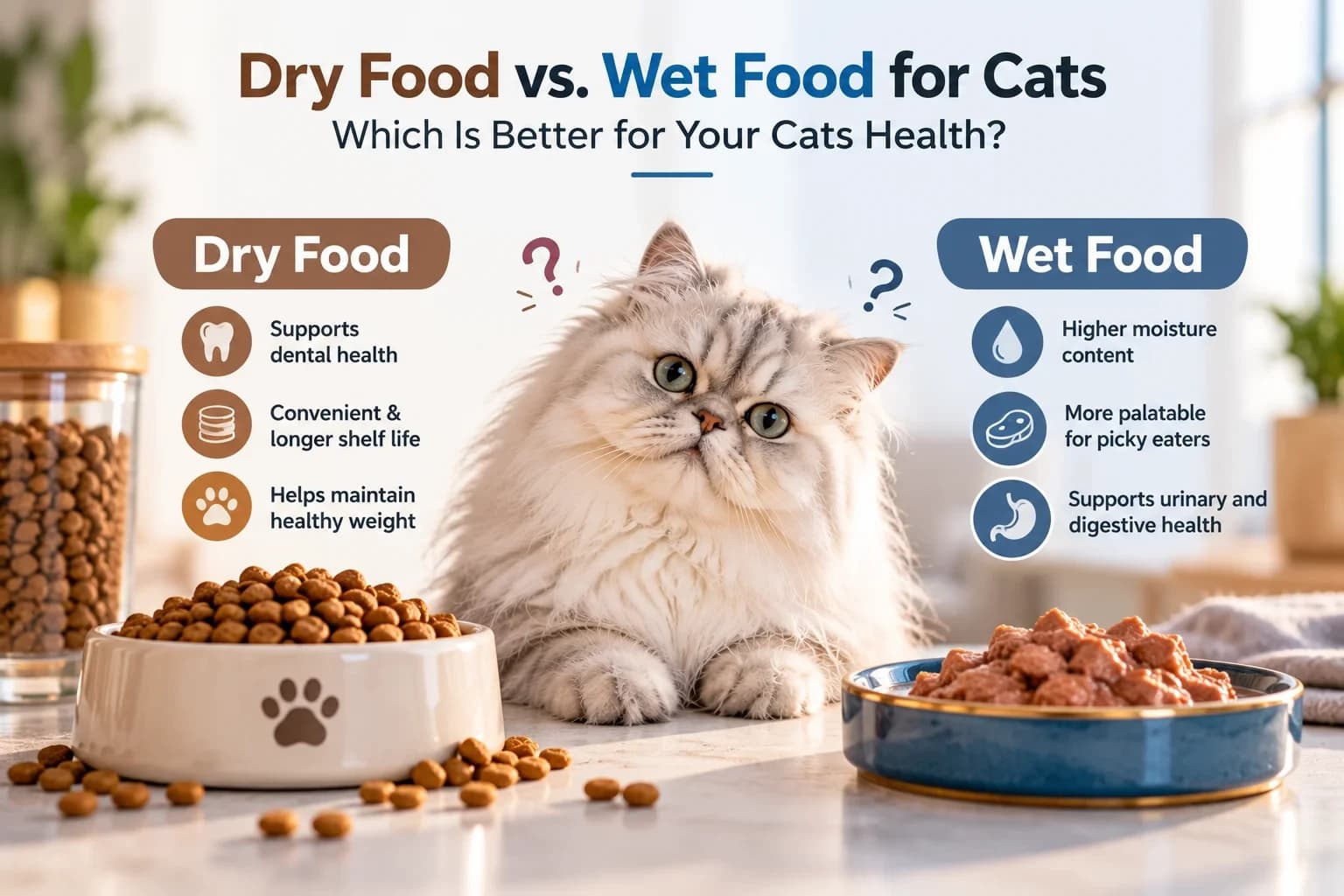
Dry food, also known as kibble, contains a low moisture content of approximately 10%, while wet food contains up to 80% moisture. Both types provide essential nutrients such as protein, fat, vitamins, and minerals. The main differences lie in their water content, manufacturing process, texture, and shelf life.
Benefits of Dry Food for Cats
Dry food offers several advantages that make it a popular choice among cat owners.
These benefits include:
Longer shelf life after opening.
Helps reduce plaque and tartar buildup through chewing.
Easy to store and does not require refrigeration before opening.
Usually more affordable than wet food.
Can remain in the food bowl longer without spoiling.
Dry food is also available in formulas designed for kittens, adult cats, senior cats, and cats with specific health conditions.
Drawbacks of Dry Food for Cats
Despite its benefits, dry food may not be the ideal choice for every cat.
Because it contains very little moisture, cats that do not drink enough water may become dehydrated. In addition, some lower-quality dry foods contain higher amounts of carbohydrates than the animal protein that cats naturally require as obligate carnivores.
Benefits of Wet Food for Cats
Many veterinarians recommend including wet food as part of a cat's daily diet because of its numerous health benefits.
Some of its key advantages include:
High moisture content that supports proper hydration.
Promotes kidney and urinary tract health.
Strong aroma and flavor, making it ideal for picky eaters or cats with poor appetite.
Soft texture that is easier for kittens, senior cats, and cats with dental problems to eat.
Often contains a higher proportion of animal protein than some dry food formulas.
Drawbacks of Wet Food for Cats
Although wet food has many advantages, there are also a few disadvantages to consider.
These include:
Spoils quickly if left at room temperature after opening.
Requires refrigeration once opened.
Generally costs more than dry food.
May contribute to plaque buildup if dental hygiene is neglected.
Dry Food vs. Wet Food for Cats: Nutritional Comparison
When comparing dry food and wet food for cats from a nutritional perspective, both can provide complete and balanced nutrition when purchased from a reputable brand.
However, wet food offers significantly higher moisture levels, helping support kidney function and reduce the risk of urinary tract problems. Dry food, on the other hand, is more calorie-dense, making it suitable for highly active cats.
Ultimately, the quality of the food and your cat's individual health needs are more important than choosing one type over the other.
Which Is Better for Kittens?
Kittens require a diet rich in protein and calories to support their rapid growth and development.
During the first months of life, wet food or softened dry food mixed with warm water is often recommended because it is easier to chew and digest. Dry food can then be introduced gradually as kittens grow older.
Which Is Better for Senior Cats?
As cats age, they may develop dental problems, decreased appetite, or kidney disease.
For many senior cats, wet food is an excellent option because it is softer, easier to eat, and provides additional hydration. However, cats with chronic medical conditions should always follow their veterinarian's dietary recommendations.
Can You Feed Cats Both Dry and Wet Food?
Yes. Many veterinarians recommend combining dry food and wet food to provide the benefits of both.
For example, dry food can be offered throughout the day, while one or two servings of wet food can be added daily. This mixed-feeding approach improves hydration, increases dietary variety, and provides balanced nutrition.
It is important to monitor your cat's total calorie intake to prevent excessive weight gain.
How to Choose the Right Food for Your Cat
When selecting cat food, consider the following factors:
Your cat's age.
Body weight and activity level.
Overall health condition.
Ingredient quality.
Animal protein content.
Your veterinarian's recommendations.
Choose products that list real meat as the primary ingredient and avoid foods containing excessive fillers or unnecessary artificial additives whenever possible.
Tips for Feeding Dry Food and Wet Food to Cats
To help your cat get the most from its diet, follow these recommendations:
Always provide fresh, clean drinking water.
Follow the recommended feeding portions.
Introduce new food gradually over several days.
Monitor your cat's weight and overall health regularly.
Consult your veterinarian if your cat experiences appetite loss, digestive problems, or unexpected weight changes.
in the end There is no single food type that is best for every cat. The choice between dry food and wet food depends on your cat's age, health, lifestyle, and individual nutritional needs. Dry food is convenient, affordable, and easy to store, while wet food provides superior hydration and better supports kidney and urinary tract health.
For many cats, combining both types of food offers the ideal balance of nutrition, hydration, and variety. If you are unsure which option is best for your cat, consult your veterinarian to develop a feeding plan tailored to your pet's specific needs.
Frequently Asked Questions
Is dry food better than wet food for cats?
Not necessarily. The best choice depends on your cat's health, hydration needs, and lifestyle. Both types can provide complete nutrition when they are high-quality products.
Can cats eat both dry food and wet food together?
Yes. Feeding both dry and wet food is often recommended because it combines the nutritional and hydration benefits of each type.
How often should cats eat wet food?
This depends on your cat's age, health, and daily calorie requirements. Many cats benefit from one or two wet food meals per day alongside dry food.
Does wet food help prevent kidney disease in cats?
Wet food helps increase water intake and supports kidney and urinary tract health, but it cannot completely prevent kidney disease. A balanced diet, regular veterinary checkups, and proper hydration remain essential.