
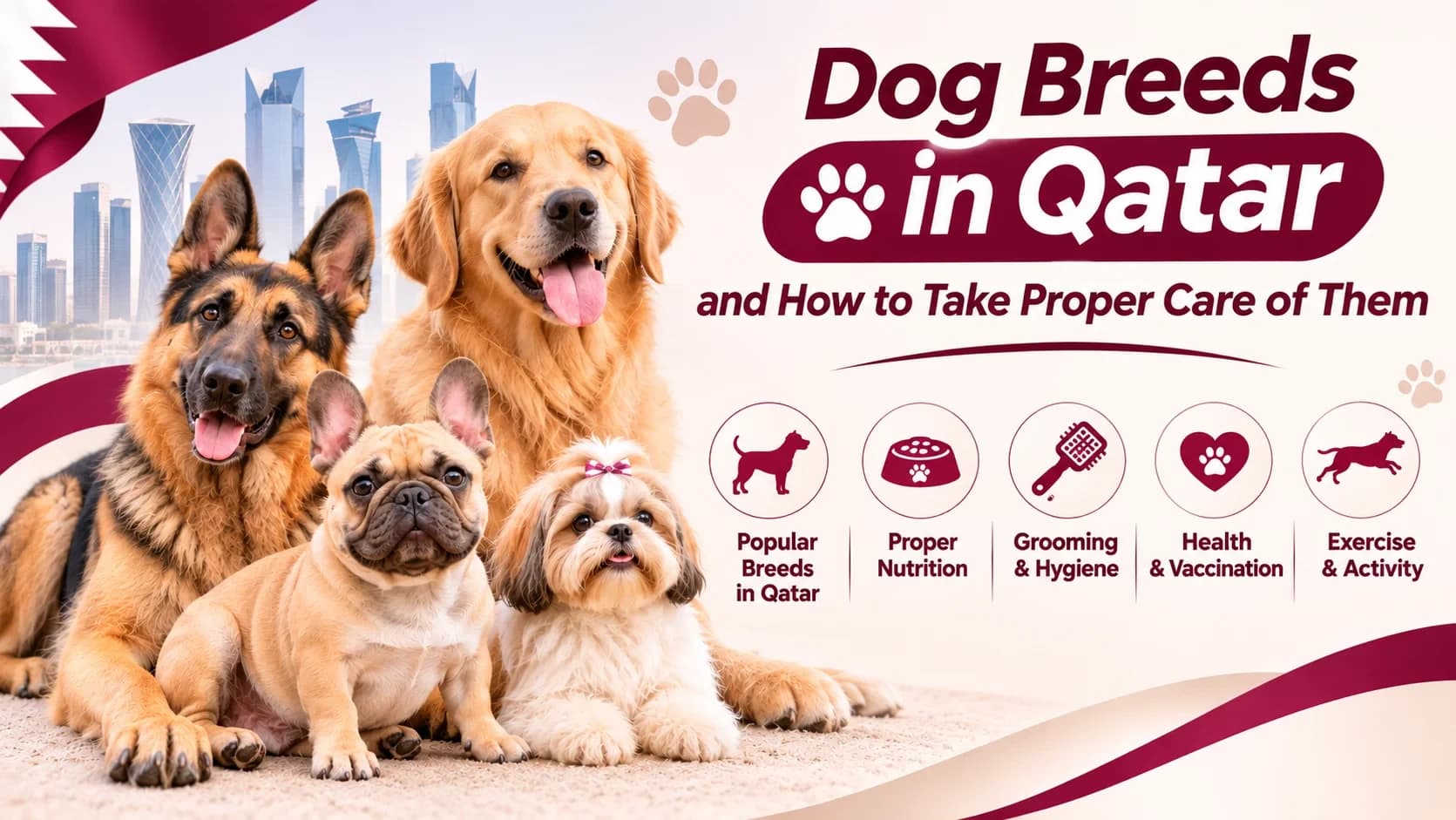
Choosing a dog is an exciting decision, but it also comes with important responsibilities. In Qatar, the hot climate, high humidity, and lifestyle in cities such as Doha and Al Rayyan can affect a dog's comfort, health, and daily routine.
Different dog breeds have different needs. Some are energetic and require regular exercise, while others are better suited to apartment living. Certain breeds also need extra attention during hot weather, particularly dogs with thick coats or flat faces.
In this guide, we explore 12 popular dog breeds and explain how to care for them properly in Qatar.
12 Dog Breeds to Know Before Choosing a Pet in Qatar
1. Saluki
The Saluki is one of the Middle East's best-known dog breeds. It is admired for its slim body, speed, and elegant appearance. Salukis are generally independent, gentle, and affectionate with their families.
Care tips: Salukis need regular exercise in a safe, enclosed area because of their strong hunting instincts. Their short coat is relatively easy to maintain, but outdoor activities should take place during cooler hours in Qatar.
2. Labrador Retriever
Labrador Retrievers are friendly, intelligent, and social dogs. They often make excellent family companions and usually enjoy playing, swimming, and spending time with people.
Care tips: Labradors need daily physical activity and mental stimulation. Monitor their food portions because they can gain weight easily. During Qatar's summer, avoid strenuous outdoor exercise and provide plenty of fresh water.
3. Golden Retriever
Golden Retrievers are affectionate, patient, and highly trainable. Their friendly personalities make them suitable for many families, especially those that can provide enough attention and activity.
Care tips: Their thick double coat requires regular brushing to control shedding and prevent tangles. Keep them in a cool indoor environment during hot weather, and schedule walks early in the morning or later in the evening.
4. German Shepherd
German Shepherds are intelligent, loyal, and protective. They are often chosen for their ability to learn commands and perform different working tasks.
Care tips: This breed needs consistent training, socialisation, and regular exercise. Its thick coat also requires frequent brushing. Avoid intense activity during peak temperatures, and provide a cool, comfortable place to rest.
5. Poodle
Poodles are intelligent, active, and available in different sizes, including Toy, Miniature, and Standard. They are known for their curly coats and ability to learn quickly.
Care tips: Poodles need regular grooming because their coats can become tangled. Brush them frequently and arrange professional grooming when needed. Their exercise routine should match their size, age, and health.
6. Shih Tzu
Shih Tzus are small companion dogs known for their affectionate nature and long, flowing coats. They can adapt well to apartment living when their daily needs are met.
Care tips: Their coat requires frequent brushing and regular professional grooming. Shih Tzus also have relatively short muzzles, which can make breathing and temperature regulation more difficult. Keep them cool and avoid exercise in hot weather.
7. Chihuahua
Chihuahuas are among the smallest dog breeds. Despite their size, they are often confident, alert, and strongly attached to their owners.
Care tips: They need gentle handling, basic training, and short daily activities suited to their energy levels. Protect them from extreme heat and provide shade and fresh water whenever they are outdoors.
8. Pomeranian
Pomeranians are small, lively dogs with thick double coats. They are often playful and alert, and they can make good companions for owners who have time for grooming and interaction.
Care tips: Brush their coat regularly to prevent tangles and matting. Do not shave a double-coated dog simply to make it cooler without veterinary or professional grooming advice. Keep outdoor activities short during hot weather.
9. Siberian Husky
Siberian Huskies are energetic working dogs originally developed for cold environments. They are known for their endurance, thick double coats, and social personalities.
Care tips: Huskies can find Qatar's hot climate particularly challenging. They need a cool indoor environment, constant access to fresh water, and carefully timed exercise. Avoid strenuous activity during warm periods and never leave them in a parked car.
10. Beagle
Beagles are curious, friendly, and energetic dogs with a strong sense of smell. They enjoy exploring and can become distracted by interesting scents during walks.
Care tips: Use a secure leash and provide regular exercise and scent-based games. Monitor their weight and avoid leaving food within easy reach. Walk them during cooler hours and keep their ears clean and dry.
11. French Bulldog
French Bulldogs are affectionate, playful, and generally well suited to indoor living. Their compact bodies and short faces, however, require special attention.
Care tips: French Bulldogs are brachycephalic, meaning they have shortened skulls and airways. This can make breathing and cooling down more difficult, increasing their risk of heat stress. Keep them in air-conditioned spaces, avoid strenuous exercise, and seek veterinary attention if you notice unusual breathing difficulties.
12. Pug
Pugs are friendly companion dogs recognised by their wrinkled faces and short muzzles. They often enjoy spending time indoors with their families.
Care tips: Like French Bulldogs, Pugs are brachycephalic and may struggle in hot or humid conditions. Keep their skin folds clean and dry, monitor their breathing, and avoid exercise during hot parts of the day. Maintaining a healthy weight is especially important.
How to Choose the Right Dog Breed for Your Lifestyle
Before choosing a dog in Qatar, consider more than its appearance. Think about your living space, daily schedule, experience with pets, and ability to meet the dog's long-term needs.
For apartment living: Smaller breeds such as Chihuahuas and Shih Tzus may adapt well, provided they receive suitable exercise and attention.
For active owners: Labradors, Golden Retrievers, and Beagles may suit households that can provide regular activity.
For experienced owners: German Shepherds and Siberian Huskies need consistent training, exercise, and careful management.
For owners concerned about grooming: Short-coated breeds may require less coat maintenance, although all dogs need basic hygiene and health care.
Remember that every dog is an individual. Breed characteristics can help guide your decision, but age, temperament, health, and previous experiences also matter.
Essential Dog Care Tips for Qatar's Climate
1. Protect Your Dog from Heat
Qatar's summer temperatures can be dangerous for dogs. Keep your pet indoors in a cool environment whenever possible, provide fresh water, and schedule walks during cooler hours.
Watch for excessive panting, weakness, vomiting, difficulty breathing, or collapse. These may indicate a serious emergency. If you suspect heatstroke, contact a veterinarian immediately. Read more about emergency symptoms in dogs and cats in Qatar.
2. Provide Balanced Nutrition
Choose food according to your dog's breed, age, size, activity level, and health condition. Measure daily portions and avoid feeding excessive treats or unsuitable human foods.
For more guidance, explore our article about the best dog and cat food brands in Qatar.
3. Follow a Veterinary Care Schedule
Regular veterinary check-ups help monitor your dog's health and identify potential problems early. Vaccinations, dental care, and parasite prevention should be planned according to your pet's individual needs.
Learn more about essential pet vaccinations in Qatar.
4. Maintain Regular Grooming
Brushing, bathing, nail trimming, and ear cleaning help maintain your dog's hygiene and comfort. Grooming frequency depends on the breed and coat type. Dogs with long or curly coats generally need more frequent brushing and professional care.
5. Make Training and Mental Stimulation Part of Daily Life
Training helps dogs develop good habits, communicate with their owners, and feel more confident in different environments. Short, positive training sessions and interactive games can make a big difference.
If you have a young dog, read our guide to puppy training in Qatar during the first six months.
6. Protect Your Dog from Fleas and Ticks
Parasites can affect pets throughout the year. Check your dog's coat and skin regularly, particularly after outdoor activities, and follow a veterinarian-approved prevention plan.
Our guide to ticks and fleas in Qatar's climate explains common warning signs and prevention methods.
7. Arrange Safe Care When You Travel
If you need to travel, choose a boarding facility that provides clean accommodation, appropriate supervision, daily care, and access to veterinary support.
Find out what to consider in our guide to pet boarding services in Qatar.
Dog Ownership Rules and Restricted Breeds in Qatar
Before buying, adopting, or bringing a dog into Qatar, check the latest official requirements for pet ownership, registration, import permits, and restricted breeds.
Rules may differ depending on the breed and the purpose of bringing the animal into the country. Do not assume that a breed is permitted simply because it is available for sale. Confirm the current requirements with the relevant Qatari authorities before making a decision.
Keeping your dog's vaccination records and identification documents up to date is also an important part of responsible ownership.
Give Your Dog the Right Care at Elite Pet Clinic in Qatar
Every dog deserves care that matches its breed, age, lifestyle, and health needs. Whether your pet needs a routine check-up, vaccinations, grooming, or professional veterinary advice, choosing the right care plan can support a healthier and happier life.
At Elite Pet Veterinary Clinic in Al Rayyan, Qatar, our team provides veterinary services and grooming support for dogs and cats. We also offer pet boarding for owners who need a safe place for their pets while travelling.
Contact Elite Pet Clinic to ask about your dog's care needs or arrange a veterinary appointment.
Frequently Asked Questions About Dog Breeds in Qatar
What are suitable dog breeds for apartment living in Qatar?
Chihuahuas, Shih Tzus, and some Poodles may adapt well to apartment living. However, their suitability depends on their temperament, exercise needs, training, and the amount of attention they receive.
Which dog breeds need extra care in Qatar's hot weather?
Siberian Huskies and other thick-coated breeds need careful heat management. French Bulldogs and Pugs also require special attention because their short airways can make breathing and cooling down more difficult.
Can Siberian Huskies live in Qatar?
They can live in Qatar with careful management, including a cool indoor environment, fresh water, and exercise during cooler hours. Owners should be particularly cautious during summer.
Are Salukis suitable for life in Qatar?
Salukis can adapt well to the region, but they still need regular exercise, secure outdoor spaces, routine veterinary care, and protection from extreme heat.
How often should I groom my dog?
Grooming frequency depends on the breed and coat type. Long-haired and curly-coated dogs generally need more frequent brushing, while all dogs benefit from regular bathing when needed, nail trimming, and ear care.
Should I consult a veterinarian before choosing a dog breed?
Yes. A veterinarian can help you understand the health considerations associated with different breeds and assess whether a particular dog's needs are suitable for your home and lifestyle.